How to Showcase Your Sustainability Efforts On Your Website
Sustainability is a hot topic in the business world right now, with more informed consumers than ever and mounting statistics about the harmful impacts of climate change. Or even more simply, the news of ever-present wildfires, wildlife population decreases, and record-breaking temperatures that greet us on social media each morning.
More than ever, small businesses are cropping up with the principles of sustainability ingrained into their practices. Whether you are a more established business pivoting its practices or a small business wanting to reach a like-minded community, your website is a great place to educate your customers on what you are doing to help.
It’s important to share transparently how your business is operating sustainably, otherwise, you might be subject to claims of “greenwashing”. Investopedia defines greenwashing as “the process of conveying a false impression or providing misleading information about how a company's products are more environmentally sound. Greenwashing is considered an unsubstantiated claim to deceive consumers into believing that a company's products are environmentally friendly.” The best way to approach this topic is with authenticity and transparency around what makes your business sustainable so as to not be deceptive.
Maybe you have a few different initiatives you are working on, maybe you haven’t yet hit your goals but are working toward them, or maybe you want to let customers know that you have more initiatives coming in the future or your reasoning for not yet pursuing certain avenues of sustainability.
A lot of business owners get stuck on the best format to relay this information and that’s why dedicating a portion of your website to discussing your sustainability practices is a great way to show customers that you care. Here are a few different ideas to consider for showcasing your efforts on your website:
- Pillars
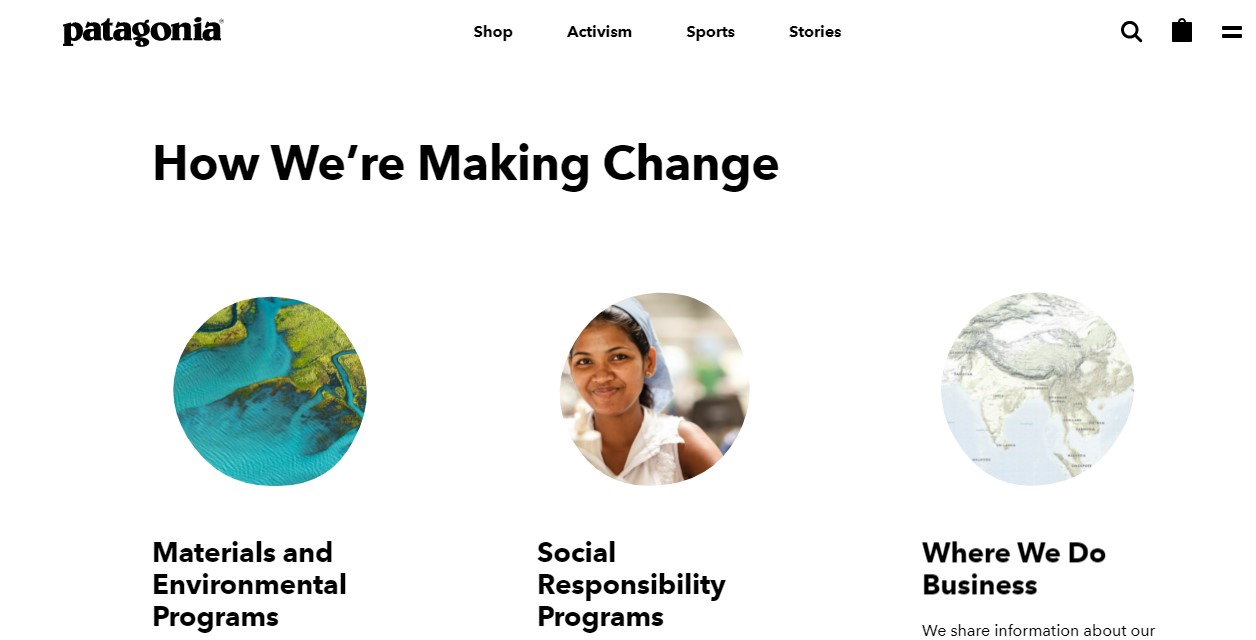
Breaking your sustainability efforts into a few (usually 3-5) pillars is one of the easiest ways you can inform your consumers of your actions, especially for businesses that are engaged in a few different avenues of sustainability. You could add this to your general ‘About’ page, a Mission page if you have one, or create an entirely new page centered around how your team is making a difference. You might even include it on your homepage if sustainability is a core attribute and differentiating factor of your business.
Some of the typical pillars include:
- Materials/Procurement - what materials you are using, how sustainable they are, and how you are sourcing them sustainably
- Workers Rights/Fair Trade - who is making your products, and if they are paid a living wage in good conditions. Note: ‘Fair Trade’ refers to a specific certification and should not be used if you have not acquired that certification.
- Shipping/Packaging - how customers are receiving your product in a sustainable manner or utilizing recycled/low waste materials for packaging for example.
- Social Responsibility Programs - how your organization is involved in the community in alignment with your sustainability goals
Here are Patagonia’s pillars on their website:
2. Timeline
A timeline can be a simple and easy way to show how your business has progressed toward sustainable practices over time. Take a look a Stella McCartney's timeline for her luxury fashion brand. She lays out when they made the switch to 100% organic cotton, stopped using angora, or reached 100% power of their stores and facilities through renewable energy.
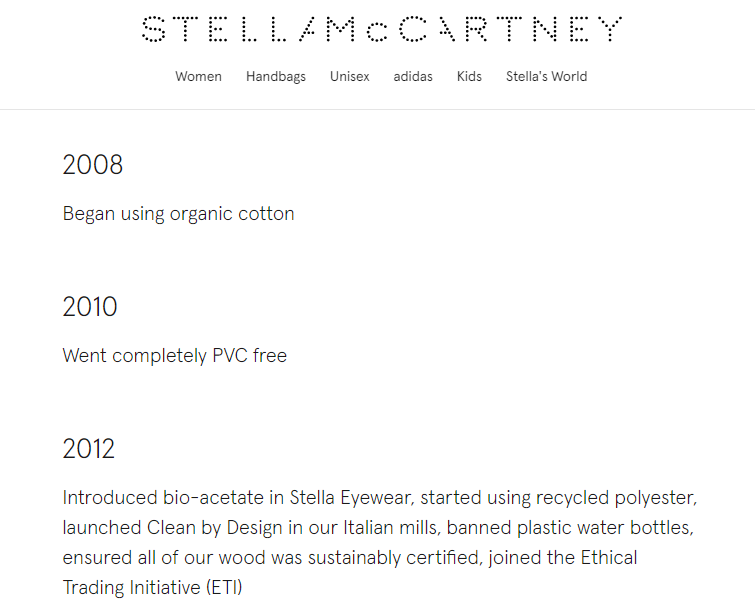
This method is great as it’s easy to digest by consumers. It works well for businesses focused on products like clothing, where you might be taking smaller steps toward replacing materials and introducing new, more sustainable fabrics.
Stella has started her timeline with the creation of her company and moved toward the present-day but you can also reverse it and start with present-day initiatives and move backward as recycling company TerraCycle has done in this example.
3. Goal Meter
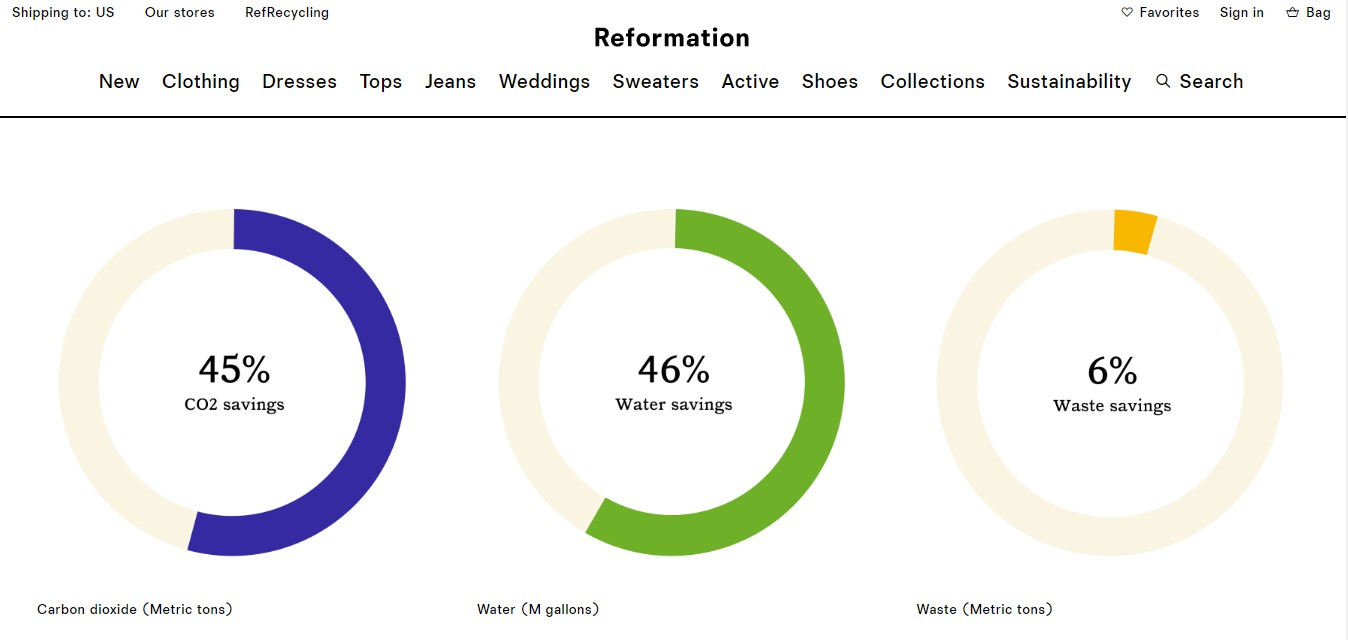
A goal meter shows how far along you are in your goals for sustainability.
It can be used to showcase things like how many of your materials are made from recycled goods, how much of your energy comes from renewable resources or how much waste you’ve diverted from landfills. Here’s an example of a goal meter on sustainable clothing brand Reformation’s website.
4. Graphic Element
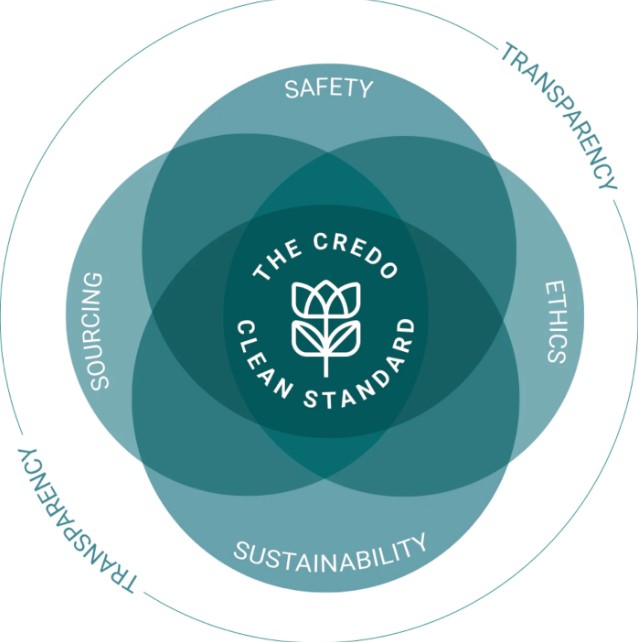
Similar to goal meters but without any specific measurements, a simple graphic element is a creative way to showcase what your business is focused on with regard to sustainability. Here is a matrix created by clean beauty organization Credo Beauty to showcase what makes up their Credo Clean Standard. Their use of interlocking circles references the belief that all of these elements affect one another and their overall organization.
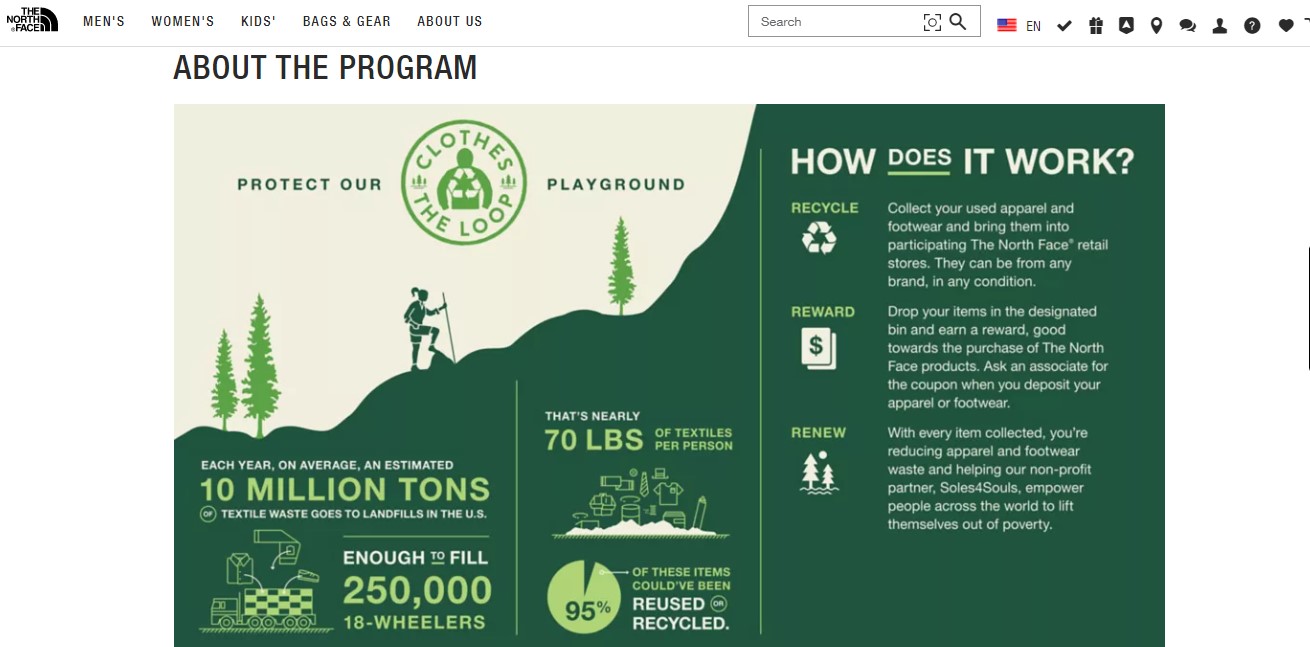
This could also include an infographic that lays out how a sustainable program you offer works. Here’s an example of North Face’s Clothes the Loop program.
5. Problem - Solution - Impact
A lot of websites just utilize plain old copy but format it in interesting ways. An impactful way to discuss your mission is with a “problem-solution-impact” format. Start by stating what the problem is that you are solving and discuss its harmful impacts on the environment. Then detail the solution your company is providing and your approach to solving the problem. Finally, describe the impact your solution has had on the environment - this is where you can share meaningful stats or testimonials.
Post a comment